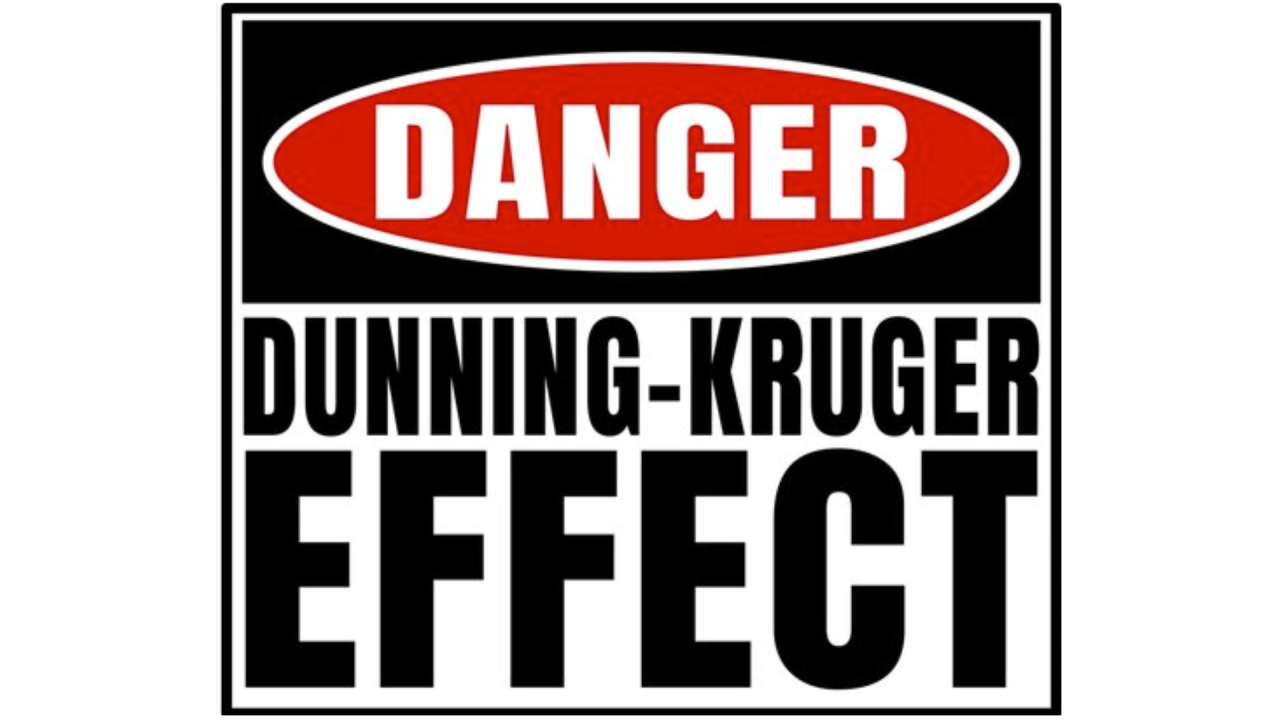
In his newsletter, Sahil Bloom shares the story of McArthur Wheeler, a man who robbed two banks with lemon juice on his face, believing it would make him invisible to security cameras. He wasn’t joking. He truly believed in his logic.
Psychologists David Dunning and Justin Kruger determined:
- Low performers dramatically overestimate their ability.
- High performers slightly underestimate theirs.
It’s not stupidity. It’s psychology. The less you know, the harder it is to see what you’re missing. And in business exits, that’s a recipe for disaster.
I’ve seen this firsthand. Business owners assume:
- “Buyers will see the potential.”
- “I know what my business is worth.”
- “I don’t need help to sell. I can sell ice to Eskimos.”
But in reality:
- Their financials can’t survive scrutiny.
- There is a massive value gap and value driver delusion.
- Their confidence keeps them from asking for help.
Overconfidence can kill deals, or prevent them from getting started.
Some Thoughts for Business Owners Planning an Exit
To counteract the Dunning-Kruger Effect in your exit planning, consider the following.
Know Your Circle of Competence (and Stay Inside It)
You know how to run your business, but selling takes completely different skills. Recognizing this and bringing in experts can be the difference between a disappointing and time-consuming adventure and a successful exit. Don’t confuse operational experience with transactional expertise.
“I Don’t Know” Is a Perfectly Good Statement When Selling a Business
Admitting what you don’t know isn’t a weakness. It’s a strategic edge. The most successful sellers ask thoughtful questions, seek guidance, and prepare deliberately. Our goal is to understand what buyers will think and how the deal will unfold before we ever go to market. You should be doing the same. In our shop, business owners who complete a valuation have an 80%+ success rate. It’s the most critical question to answer early: What is my business worth?
Are You Sure About the Things You Are Sure Of?
Assumptions like “my business is worth 5x revenue” or “buyers will see the potential” often collapse under buyer scrutiny. Ask yourself: Can this be proven? Would I pay this if I were buying my own business?
Confidence ≠ Preparedness
Confidence is believing you’re ready. Preparedness is proving exit readiness. Buyers care about documentation, systems, financial integrity, and transition planning, not how passionately you talk about your company.
Adapted from “The Dunning-Kruger Effect: The Psychology of Overconfidence” by Sahil Bloom, via The Curiosity Chronicle.
If you’re a business owner considering an exit, don’t let confidence become a blind spot. Humility, curiosity, and preparation will put your successful exit far ahead of those who don’t.
First published on LinkedIn.