There is a Japanese concept called wabi-sabi. It has no direct English translation, but its essence is this: beauty lives in imperfection, impermanence, and incompleteness.
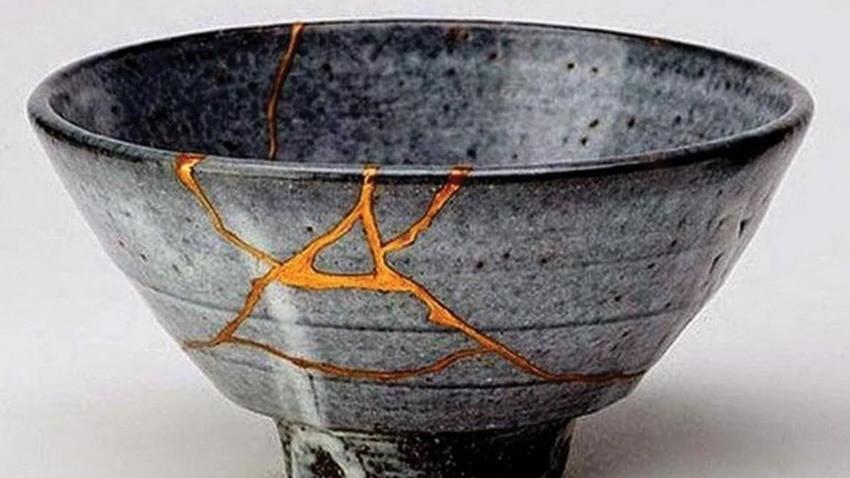
The cracked bowl repaired with gold has nothing to do with business. Except that it has everything to do with exits.
The Illusion of the Perfect Sale
Most founders spend the final chapter of ownership trying to erase the evidence of the journey. Clean up the books. Hide the key-man dependency. Present the business as something pristine, a machine, not a life’s work.
Advisors often enable this. We help clients polish, reframe, and package. There is wisdom in that. But somewhere in the pursuit of the perfect CIM, something gets lost. The story. The truth of what was actually built.
Imperfection: Stop Being Afraid of the Cracks
Wabi-sabi does not ask you to celebrate your flaws carelessly. It asks you to stop being afraid of them.
Due diligence will find what you tried to hide. It always does. And when it does, trust erodes not because the issue was disqualifying, but because it was concealed.
The founder who says, “Here is what we built, here is where we struggled, here is what we know and don’t know,” creates something rare: credibility. Authenticity is not weakness. In an exit process, it is often the most sophisticated move.
Impermanence: The Business Was Never Meant to Last Forever
The hardest part of an exit is rarely the deal mechanics. It is the morning after signing, when the founder realizes that the thing that organized their identity and relationships for a decade is no longer theirs.
Everything is impermanent. The business was always going to end in some form. That is not failure. It is the natural arc of something that was alive.
The exit is not the ending of the story. It is the ending of a chapter, and the beginning of someone else’s. The most grounded sellers I have seen made peace with that before they ever signed an LOI.
Incompleteness: The Unfinished Parts Are the Opportunity
A buyer is rarely paying for what you built. They are paying for what you didn’t build, so they can.
Incompleteness is not a gap. It is an invitation. The best sellers present the unfinished not as a deficiency, but as a thesis: I built the foundation. You get to build the rest. That framing doesn’t just change the narrative. It can also shift the valuation conversation.
Kintsugi and the Role of the Advisor
Kintsugi is the Japanese art of repairing broken pottery with gold. The cracks are not hidden. They are highlighted. The breakage becomes part of the beauty.
This is what a great advisor actually does: not hiding the cracks, but helping the founder tell their story in a way that reveals the gold inside.
The near-failure that forced a pivot and produced the company’s best product. The difficult year that hardened the culture. The customer loss that led to a more resilient sales process. Told well, these are not liabilities. They are proof of resilience.
A Different Kind of Readiness
We talk a lot about exit readiness: clean financials, recurring revenue, management depth. All of it matters.
But wabi-sabi suggests another kind of readiness that never appears on a checklist: the willingness to let the business be what it was, imperfect, impermanent, and incomplete, and to stand in that truth with confidence rather than apology.
That is the founder who shows up not as a supplicant hoping to be approved, but as a craftsperson presenting their work.
And that, in my experience, is the founder who sells well.
First published on LinkedIn.